
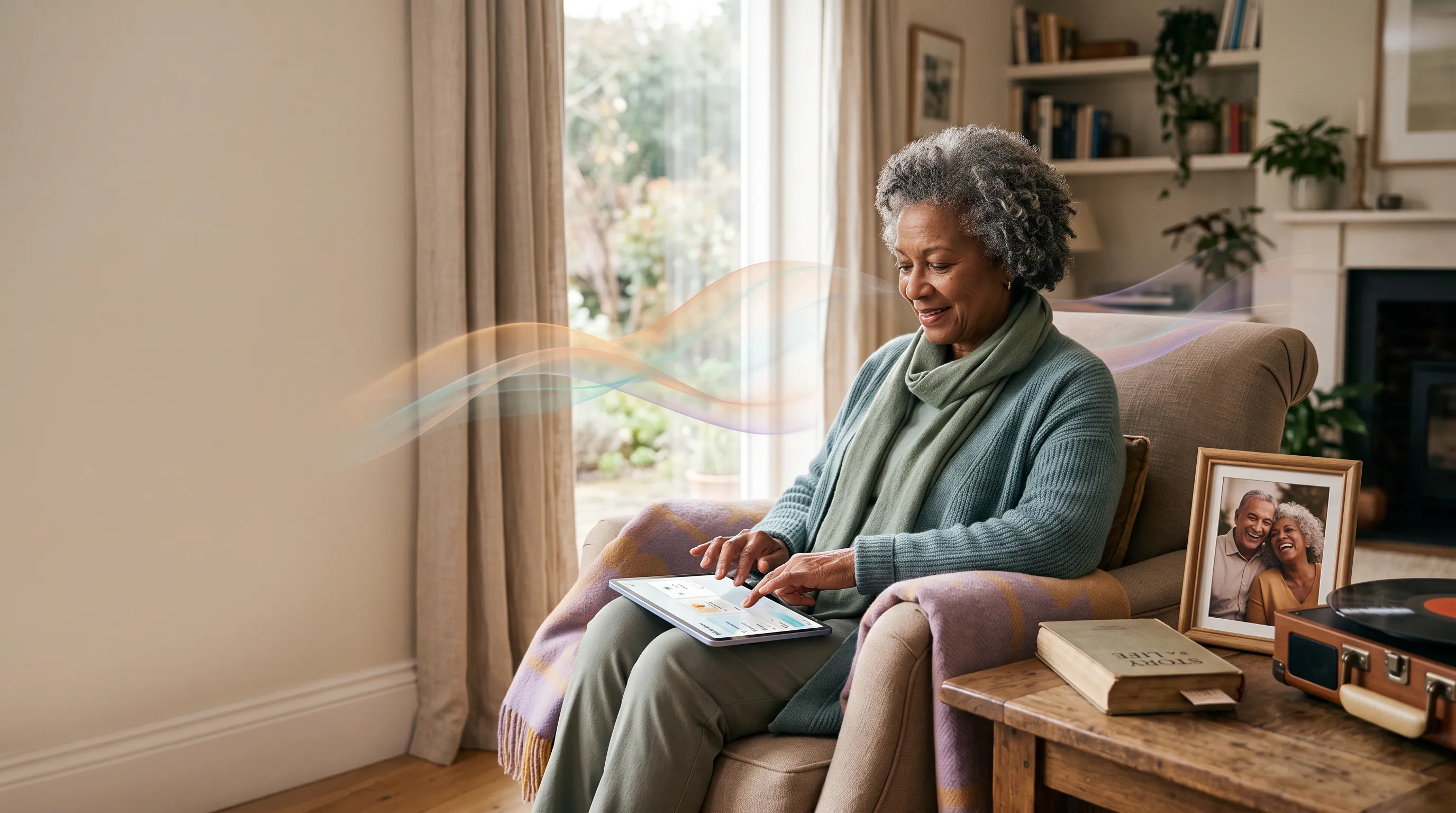
Living With Dementia: Comfort, Connection & Daily Support
Dementia can change how a person experiences memory, communication, surroundings and daily routines. But a diagnosis does not describe the whole person. Their memories, preferences, relationships, routines, personality and sense of identity remain important.
The goal of supportive technology should therefore not be to create a "dementia dashboard." It should create a workspace that adapts to the person — one that honors who they are today, while keeping them connected to what has always mattered to them.
COI Orb is built around that principle. There is no single "dementia mode." Instead, each person — and their care circle — can choose the tools that make sense for their own day.
What Can Change in Everyday Life
Unfamiliar environments and routines
Changes in environment or schedule can feel disorienting. A space that feels predictable and familiar can reduce anxiety and support a sense of safety. Consistent daily structure — morning routines, meal times, rest periods — helps anchor the day.
Communication difficulties
Finding the right words, following conversations or expressing needs can become harder over time. Simple, calm and respectful communication preserves dignity. Technology that supports voice-based interaction or visual cues can bridge some of those gaps.
Sensory overload
Loud noises, bright lights or too much information on a screen can feel overwhelming. A calmer sensory environment — softer sounds, warmer lighting, simpler interfaces — can make technology more accessible and comfortable.
Nighttime confusion and sleep disruption
Many people living with dementia experience restlessness, confusion or wakefulness at night. A low-stimulation nighttime environment with gentle orientation cues can help both the individual and their caregivers get better rest.
Loss of independence and caregiver fatigue
As daily tasks become more difficult, individuals may feel a loss of control. At the same time, caregivers carry a significant emotional and physical burden. Tools that support autonomy — while also making coordination easier for caregivers — can help both.
What Can Help
Predictability and familiar routines
Consistent routines can make the day easier to understand. A Daily Compass that shows the structure of the day — in simple, familiar terms — can provide orientation without feeling clinical or institutional.
Familiarity through music and memory
Music, photographs, familiar voices and meaningful memories can support emotional connection and a sense of self. Sensory Lane creates a personalized environment drawn from the person's own life, not a generic playlist.
Calm, accessible environments
Reducing unnecessary stimulation can make technology less overwhelming. The Harmony Engine offers personalized calming soundscapes, while Motor-Steady adjusts interaction targets for those who find standard controls difficult.
Family connection on the person's terms
Staying connected with family should not require constant phone calls or complex apps. Silent Invite lets family members share moments, messages and presence without adding pressure.
The Person Comes First
You don't activate a “disease mode.” You choose what helps.
There is no single “right” digital workspace for everyone living with a serious illness. Two people with the same diagnosis can have completely different priorities. One person may want help staying connected with family. Another may want a quieter environment. Another may need larger controls. Another may want to preserve their stories.
COI Orb is designed around that difference.
Adaptive Tools That May Help
Sensory Lane
Familiar music, photographs and sensory grounding drawn from the person's own life and memories.
Daily Compass
Predictability, orientation and daily structure presented in a gentle, accessible format.
Harmony Engine
Personalized calming sound environments that can reduce anxiety and support relaxation.
3 a.m. Whisper Mode
A low-stimulation nighttime workspace designed to support orientation and calm during nighttime waking.
Story Scribe
Voice-based communication that turns spoken thoughts into editable journal entries.
Echo Legacy Vault
Preserve stories, memories and meaningful moments for the person and their family.
Silent Invite Canvas
Coordinate family and caregiver support without constant calls and messages.
Motor-Steady Overlay
Adapts interaction targets for those who find standard touch controls difficult.
Guardian Beacon
A configurable pathway to priority assistance when the person or their circle needs it.
Build Your Compassion Workspace
Choose what matters to you. Activate the tools you want. Your workspace adapts. Your caregiver sees only what you authorize. Your family stays connected according to your preferences.
Frequently Asked Questions
Can technology help someone living with dementia?
+
Technology may help with communication, routines, reminders, accessibility, family connection and meaningful activities. The appropriate tools depend on the individual's preferences, abilities and daily experience.
Should someone with dementia use the same tools as everyone else?
+
Not necessarily. Individual preferences, abilities, sensory needs and routines should guide the workspace. COI Orb allows each person to choose the tools that fit their own day.
Can a caregiver manage a person's COI Orb workspace?
+
When authorized by the individual or their authorized representative, a caregiver can assist with workspace setup and adjustments according to the permissions the person has established.
Does COI Orb replace medical care for dementia?
+
No. COI Orb provides comfort, communication and daily-support tools. It does not diagnose, treat or cure any medical condition. Medical care should always be directed by qualified healthcare professionals.
Trusted Resources
Alzheimer Society of Canada
Dementia education, support programs, caregiver resources and community connections across Canada.
World Health Organization
Palliative-care framework and global guidance on quality of life for people with serious illness.
Canadian Hospice Palliative Care Association
National advocacy, education and resources for hospice and palliative care in Canada.
Related Conditions

Living With Parkinson's: Independence, Communication & Connection
Explore personalized ways to support communication, independence, routines, accessibility and connec...

Palliative Care: Comfort, Dignity, Family & Quality of Life
Learn what palliative care means, how it supports quality of life, and how individuals, caregivers a...
COI Orb provides adaptive comfort, communication and daily-support tools. It does not diagnose, treat or cure any medical condition. Always consult qualified healthcare professionals for medical advice, diagnosis and treatment.